Nonresident Annual Fishing License Cost in New Hampshire
Planning a fishing trip to New Hampshire from out of state can be a fantastic adventure, but the process of figuring out exactly what kind of fishing license you need and how much it’ll set you back can feel a bit like trying to untangle a backlash on a baitcaster. It's frustrating when you just want to get out on the water, yet you're bogged down by paperwork and pricing. This guide is here to untangle all that for you, providing a clear, comprehensive breakdown of the nonresident annual fishing license cost in New Hampshire, what it covers, and everything you need to know to fish legally and confidently.
Understanding the Nonresident Annual Fishing License in New Hampshire
When you're dreaming of casting lines into the pristine lakes or rushing rivers of the Granite State, whether it's for the elusive landlocked salmon of Sunapee or the feisty smallmouth bass of Winnipesaukee, your first real step, after packing your favorite gear, is securing the right to fish. For those of us who don't call New Hampshire home year-round, that means a nonresident license. The annual option is often the most cost-effective and convenient if you plan multiple trips throughout the year or just enjoy the flexibility of knowing you're covered for a full season.
It's easy to assume all fishing licenses are created equal, but New Hampshire, like many states, has specific categories. A nonresident annual fishing license is designed for anyone 16 years of age or older who doesn't meet the state's residency requirements but wants to enjoy its diverse freshwater fisheries for an extended period. This isn't just a piece of paper; it's your official permission slip from the New Hampshire Fish and Game Department to engage in the sport you love within state lines.
What an Annual License Covers
The beauty of the annual license, beyond its straightforward nature, is the extensive coverage it provides. Once you've got your New Hampshire Fishing License Guide for 2026 in hand, you're generally good to go for fishing in all public freshwater bodies across the state, from the tiny, tucked-away trout streams in the White Mountains to the expansive depths of Lake Winnipesaukee. This includes ponds, lakes, rivers, and streams, for all legal game fish and panfish species, for a full calendar year.
The annual license typically runs from January 1st to December 31st of the year it's purchased, regardless of when you actually buy it during that period. This means if you purchase it in July, it still expires on December 31st of that same year. It's important to keep this in mind for future planning, especially if you're thinking about a late-season trip that might spill into the next calendar year. Having this license simplifies your fishing endeavors, freeing you from the hassle of buying a new short-term permit for every single visit.
Who Needs a Nonresident License
The rule of thumb for fishing licenses in New Hampshire is generally that anyone 16 years of age or older needs one. This applies universally, whether you're a resident or a nonresident. So, if you're visiting from Massachusetts, Vermont, or even further afield, and you've reached your 16th birthday, you'll need to secure a nonresident fishing license before you cast your first line. It's a critical legal requirement, and skipping it can lead to some pretty hefty penalties that will definitely put a damper on your vacation.
There are a few key exceptions to this age rule, primarily for very young anglers. For instance, children under the age of 16 are typically exempt from needing a license. This is fantastic news for families looking to introduce their kids to the joys of fishing without an extra financial burden. However, even if they don't need a license, children are still subject to all other New Hampshire Fishing Regulations Explained, including bag limits, length limits, and season dates. Always double-check the latest regulations, as these rules can occasionally change.
Breaking Down the Costs: Nonresident Annual Fishing License
Let's get down to the brass tacks – the money side of things. It's no secret that nonresident licenses often come with a higher price tag than those for residents, and New Hampshire is no exception. This difference in cost helps fund the conservation efforts, fish stocking programs, and habitat management that benefit everyone who enjoys the state's natural resources, regardless of where they hail from. Understanding the cost structure helps you budget accurately and avoid any surprises.
The actual cost can fluctuate slightly year to year, so it's always wise to check the New Hampshire Fish and Game Department's official website for the most current pricing. However, for 2026, we can provide a very close estimate that will help you plan your upcoming adventures. Remember, these fees are what directly support the health of the fisheries, so while it's an expense, it's also an investment in the future of New Hampshire fishing.
Base Fee for the Annual License
For 2026, the base fee for a nonresident annual freshwater fishing license in New Hampshire is expected to be around $63. This is the core price you'll pay for the privilege of fishing for a full year. This fee provides you with access to all the freshwater fishing opportunities the state has to offer, from chasing brook trout in the headwaters of the Merrimack River to targeting lake trout in the deep basins of Lake Winnipesaukee.
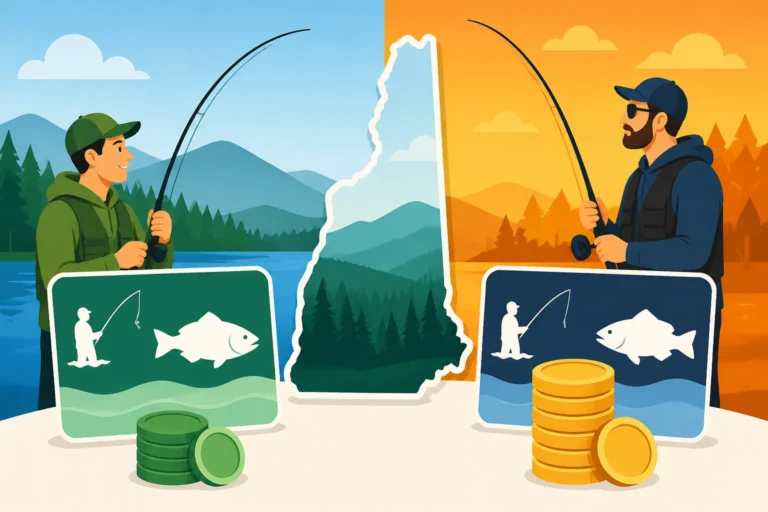
It’s important to distinguish this from specialty licenses or combination licenses, which we'll touch on later. This $63 figure is specifically for the standard freshwater annual fishing permit. There isn't a separate saltwater fishing license required for New Hampshire's marine waters, though federal regulations may still apply, especially if you're fishing for certain species or in particular areas. If you're comparing costs, remember that a resident annual license is significantly less, usually around $45, highlighting the financial difference in Resident vs Nonresident Fishing License Costs in New Hampshire.
Additional Agent Fees and Online Surcharges
While the base fee is the primary cost, it's rare that you'll pay exactly that amount. Most transactions, especially those made online or through a licensed agent, come with small additional fees. When you purchase your license through the New Hampshire Fish and Game Department's online licensing system, you'll typically encounter an online transaction fee. This fee, usually a couple of dollars, covers the administrative costs of processing your payment and issuing your digital license.
Similarly, if you opt to buy your license in person at a designated license agent – like a local tackle shop, sporting goods store, or town clerk's office – they often levy a small agent fee. This fee compensates the vendor for their service in processing the license on behalf of the state. These fees are usually minimal, often in the range of $1 to $2, but they do add to the total. So, when budgeting, add an extra few dollars to that $63 base fee to account for these minor but common charges, bringing your total closer to $65-$66.
Comparing Annual vs. Short-Term Options
Choosing an annual license isn't always the right fit for every nonresident angler, especially if you only plan a single, short visit. New Hampshire offers several short-term nonresident fishing permits that might be more economical depending on the length of your stay. These include 1-day, 3-day, and 7-day options, each with its own price point.
Let's look at a quick comparison to help you decide:
| License Type | Estimated 2026 Cost (Base Fee) | Best For |
|---|---|---|
| Nonresident Annual | $63 | Multiple trips, extended stays, flexibility |
| Nonresident 7-Day | $50 | Week-long vacations |
| Nonresident 3-Day | $28 | Long weekends, short fishing getaways |
| Nonresident 1-Day | $15 | Single day trips, trying out the waters |
As you can see, if you're staying for a full week, the 7-day option is a good value at around $50. However, if you're planning two or more trips that add up to more than a week total, or if you're staying for more than seven days in one go, the annual license at $63 quickly becomes the more economical choice. For example, two 3-day trips would cost you $56 total, almost the same as an annual license, but with less flexibility. This table does not include the small transaction fees you might incur, which would be applied per purchase. You can find more details on these options in our guide on New Hampshire 1-Day and 3-Day Nonresident Fishing Permits.
Specific Scenarios and Special Considerations
Fishing in New Hampshire isn't just for adults; it's a family affair! And the state does a good job of considering various demographics and circumstances when it comes to licensing. Whether you're bringing young anglers along, are a seasoned veteran looking for discounts, or want to combine your love for fishing with hunting, there are specific regulations and options that apply. It’s always best to be informed to ensure everyone on your trip is properly covered, or correctly exempt.
Ignoring these specific scenarios could mean missing out on cost savings or, worse, inadvertently breaking a regulation. The New Hampshire Fish and Game Department aims to make fishing accessible and enjoyable, but that also comes with the responsibility of understanding the rules. This section will delve into some common questions that arise for nonresident anglers with unique situations.
Nonresident Youth and Senior Fishing Regulations
As mentioned, youth under 16 years of age do not need a fishing license in New Hampshire, regardless of residency. This is a fantastic incentive for families to get out on the water with their kids. Imagine taking your grandchild from out of state to a stocked pond like Bellamy Reservoir or meeting them up at a family camp on Squam Lake; as long as they're under 16, they can fish freely! It’s one less thing to worry about when planning a family fishing outing.
For nonresident seniors, the situation is a bit different than for New Hampshire residents. While resident seniors often qualify for discounted or even free licenses, there isn't a comparable blanket discount for nonresident seniors. Nonresident anglers aged 68 and older are still required to purchase the standard nonresident annual fishing license at the full rate. While this might be a bit of a bummer for some, it’s a policy designed to prioritize resources for New Hampshire’s long-term residents. Therefore, if you're a senior visiting from out of state, plan on budgeting for the standard annual nonresident fee. For specific details on youth regulations, consult our article, Do Kids Need a Fishing License in New Hampshire?.
Combination Hunting and Fishing Licenses for Nonresidents
If you’re an avid outdoors enthusiast who enjoys both fishing and hunting, New Hampshire offers combination licenses that can sometimes be a more convenient and cost-effective option than purchasing separate licenses. For nonresidents, these combination licenses are available and include both freshwater fishing privileges and various hunting permits, depending on the specific package you choose.
The cost for a nonresident combination license will naturally be higher than just a fishing license, as it encompasses more activities. For instance, a nonresident combination hunting and fishing license for 2026 might run you upwards of $200-$300, depending on the specific hunting permits included (e.g., small game, archery, firearm deer, etc.). It’s crucial to research the exact components of each combination license to ensure it covers all the species and seasons you intend to pursue. Often, these combination licenses are designed to streamline the process for dedicated sportsmen and women who plan extensive trips to the state throughout the year. You can explore these options further in our guide on New Hampshire Combination Hunting and Fishing License Options.
Military Personnel and Disabled Veteran Discounts
New Hampshire deeply appreciates the service of its military personnel and veterans, and this appreciation often extends to outdoor recreational opportunities, including fishing. For active-duty military personnel who are residents of New Hampshire, there are specific provisions that may offer discounted or free licenses. However, for nonresidents, the rules can be a bit more nuanced.
Generally, nonresident active military personnel or disabled veterans are still subject to nonresident license fees. That said, New Hampshire does offer special considerations for disabled veterans, including a free annual fishing license for eligible resident disabled veterans. For nonresidents, these specific free or discounted options are less common. However, it's always worth checking the very latest regulations directly with the New Hampshire Fish and Game Department, as policies can sometimes be updated or special programs introduced. They often have dedicated sections on their website or customer service lines to assist service members and veterans with their specific licensing questions. For those who meet specific criteria for disabilities, there is also information regarding a New Hampshire Fishing License for Disabled Residents which may be pertinent to some, even if the primary focus is on residents.
How to Purchase Your Nonresident Annual Fishing License
You've decided on the nonresident annual license, understood the costs, and checked if any special conditions apply to you. Great! Now, how do you actually get your hands on one? New Hampshire, thankfully, offers several convenient ways to purchase your fishing license, catering to both the technologically savvy and those who prefer a more traditional, in-person transaction. No matter your preference, the process is generally straightforward, designed to get you on the water with minimal fuss.
It's crucial to purchase your license before you start fishing. Fishing without a valid license is a serious offense that can lead to fines and other penalties. So, plan ahead! Don't wait until you're standing on the riverbank with your rod assembled to remember you still need a license. This preparation ensures a smooth, stress-free start to your New Hampshire fishing adventure.
Online Purchase Process
For most modern anglers, buying a license online is the easiest and quickest route. The New Hampshire Fish and Game Department maintains a user-friendly online licensing system that allows you to purchase your nonresident annual fishing license from anywhere, at any time, using your computer or mobile device. This is incredibly convenient if you're planning your trip from a different state and want to have everything squared away before you even leave home.
To purchase online, you'll visit the official New Hampshire Fish and Game Department website, navigate to their licensing portal, and follow the prompts. You'll need to provide some personal information, such as your name, address, date of birth, and usually a driver's license or state ID number. You'll then select the nonresident annual freshwater fishing license, and proceed to payment. Once the transaction is complete, you'll typically receive a printable copy of your license via email, and often, you can even carry a digital version on your smartphone. This entire process usually takes less than 10-15 minutes, making it a highly efficient option. If you want a full walkthrough, check out our guide on How to Buy a Fishing License Online in New Hampshire.
In-Person Purchase at License Agents
If you prefer a face-to-face transaction, or if you're already in New Hampshire and just remembered you need a license, you can purchase one from an authorized license agent. These agents are typically local businesses that partner with the Fish and Game Department, such as bait and tackle shops, sporting goods stores, and town or city clerks' offices. There are hundreds of these locations scattered across the state, making it easy to find one no matter where your fishing destination is.
Purchasing in person can be a great way to also get some local fishing tips or current conditions reports from the folks behind the counter, who are often avid anglers themselves. Just remember to bring your identification, such as a driver's license, and be prepared to pay the small agent fee in addition to the license cost. A common question arises about where exactly to find these agents. While a comprehensive list is available on the NH Fish and Game website, asking a local during your travels is often the quickest way to find a nearby location. Our article, Where and How to Buy a New Hampshire Fishing License, also offers a good overview of these various purchasing methods.
Important Information for Your Purchase
Regardless of whether you buy your license online or in person, there are a few pieces of information you'll absolutely need to have handy. First and foremost, you’ll need a valid form of identification. For nonresidents, this typically means a driver's license or a state-issued ID card from your home state. This helps verify your identity and, crucially, your nonresident status. While you’re purchasing, always ensure all your personal details are entered accurately, especially your mailing address and date of birth, as this information is tied to your official license record.
It’s also important to understand the concept of "proof of residency." As a nonresident, you won't be proving New Hampshire residency, but rather that you are not a resident. The information from your home state ID will accomplish this. Furthermore, once you have your license, it is your responsibility to carry it with you while fishing. Whether it's a physical printout, a digital copy on your phone, or an official durable card, having proof of your valid license is non-negotiable. Law enforcement or Fish and Game officers may ask to see it, and not having it can lead to penalties, even if you did technically purchase one. Our article on Printing or Carrying a Digital Fishing License in New Hampshire gives practical advice on this topic.
Maximizing Your New Hampshire Fishing Trip as a Nonresident
Getting your license is a huge step, but it's just the beginning of truly making the most of your New Hampshire fishing adventure. As a nonresident, you might not be intimately familiar with the local waters, the specific regulations that vary by water body, or the best techniques for targeting certain species in the Granite State. Taking the time to do a little extra research and preparation can dramatically increase your chances of a successful and enjoyable trip.
Think about it: you've traveled a distance, paid for your annual license, and invested in gear. You want to ensure that investment pays off with memorable catches and incredible experiences. This section will guide you through some key considerations for nonresidents, from understanding the nuances of local rules to preparing your tackle, helping you feel like a seasoned local even on your first visit.
Understanding New Hampshire Fishing Regulations
Beyond just having a license, truly understanding the comprehensive New Hampshire Fishing Regulations Explained is paramount. These regulations cover everything from daily bag and possession limits for various species to minimum and maximum length limits, special regulations on specific water bodies, and even restrictions on bait use. For example, the daily limit for trout might be five fish on most general waters, but some special regulation waters might be catch-and-release only, or have different length limits.
Water bodies like Lake Winnipesaukee, Squam Lake, and the Connecticut River often have their own unique sets of rules due to their size, depth, or the presence of specific species like landlocked salmon or lake trout. It’s not uncommon for different species to have different open seasons and bag limits within the same lake. Always consult the most current New Hampshire Freshwater Fishing Digest, available digitally on the NH Fish and Game website, before heading out. This digest is your bible for compliance and will save you from potential fines or, worse, unintended harm to the fishery.
Planning for Specific Species and Seasons
New Hampshire offers an incredible diversity of fishing experiences, from ice fishing for lake trout in the winter to fly fishing for brook trout in secluded mountain streams during the summer, or chasing striped bass in Great Bay. As a nonresident, planning your trip around the species you want to target and the best seasons for them is crucial. Are you dreaming of big smallmouth bass? Then late spring and early summer on a lake like Winnipesaukee might be your prime window. Looking for landlocked salmon? Early spring after ice-out, or the fall spawning runs, could be ideal for trolling on deep lakes. Our guide on New Hampshire Fishing Season Dates and Closures can be a huge help here.
Consider the time of year you'll be visiting and what fish are most active then. For instance, if you're coming in May, many of the smaller trout ponds will be freshly stocked and provide excellent action. If it's August, you'll likely be targeting bass in deeper water or exploring shaded river stretches for trout. Knowing your target species and their habits will allow you to tailor your gear, techniques, and even your choice of fishing location, like referencing our guide on Best Fishing Lakes in New Hampshire or Best Fishing Rivers in New Hampshire.
Essential Gear Considerations for Out-of-State Anglers
Bringing the right gear can make or break a nonresident fishing trip. While you might have a trusty setup for your local waters, New Hampshire's diverse environments might call for some specific additions or modifications. For instance, if you're planning to target lake trout, you might need heavier line and perhaps some specialized trolling gear like downriggers, which you can easily find on platforms like Amazon if you don't already own them. If you’re wading mountain streams for brook trout, investing in good quality, breathable chest waders and sturdy wading boots is essential for comfort and safety, again, easily shoppable online.
Consider the weather, which can be unpredictable in New Hampshire. Always pack layers and good rain gear, regardless of the forecast. A quality pair of polarized sunglasses will help you spot fish and submerged structure, enhancing your sight fishing capabilities in clear New Hampshire waters. Don't forget essentials like a good landing net, particularly for catch-and-release, and a tackle box stocked with local favorites. Many local bait shops will have regional lure recommendations, but for staple items, or if you prefer to have everything ready before you travel, Amazon offers a wide selection of proven baits and lures suitable for New Hampshire's fisheries. Having the right tools, whether it’s a specific kind of lure or a multi-tool for on-the-water repairs, ensures you're prepared for whatever the Granite State throws your way.
Disclaimer
The information provided in this guide is for general informational purposes only and is based on typical regulations and costs. Fishing regulations and license fees in New Hampshire are subject to change by the New Hampshire Fish and Game Department. It is the angler's sole responsibility to consult the most current official New Hampshire Freshwater Fishing Digest and regulations prior to any fishing activity. Always verify specific rules, seasons, and costs with the official New Hampshire Fish and Game Department resources.