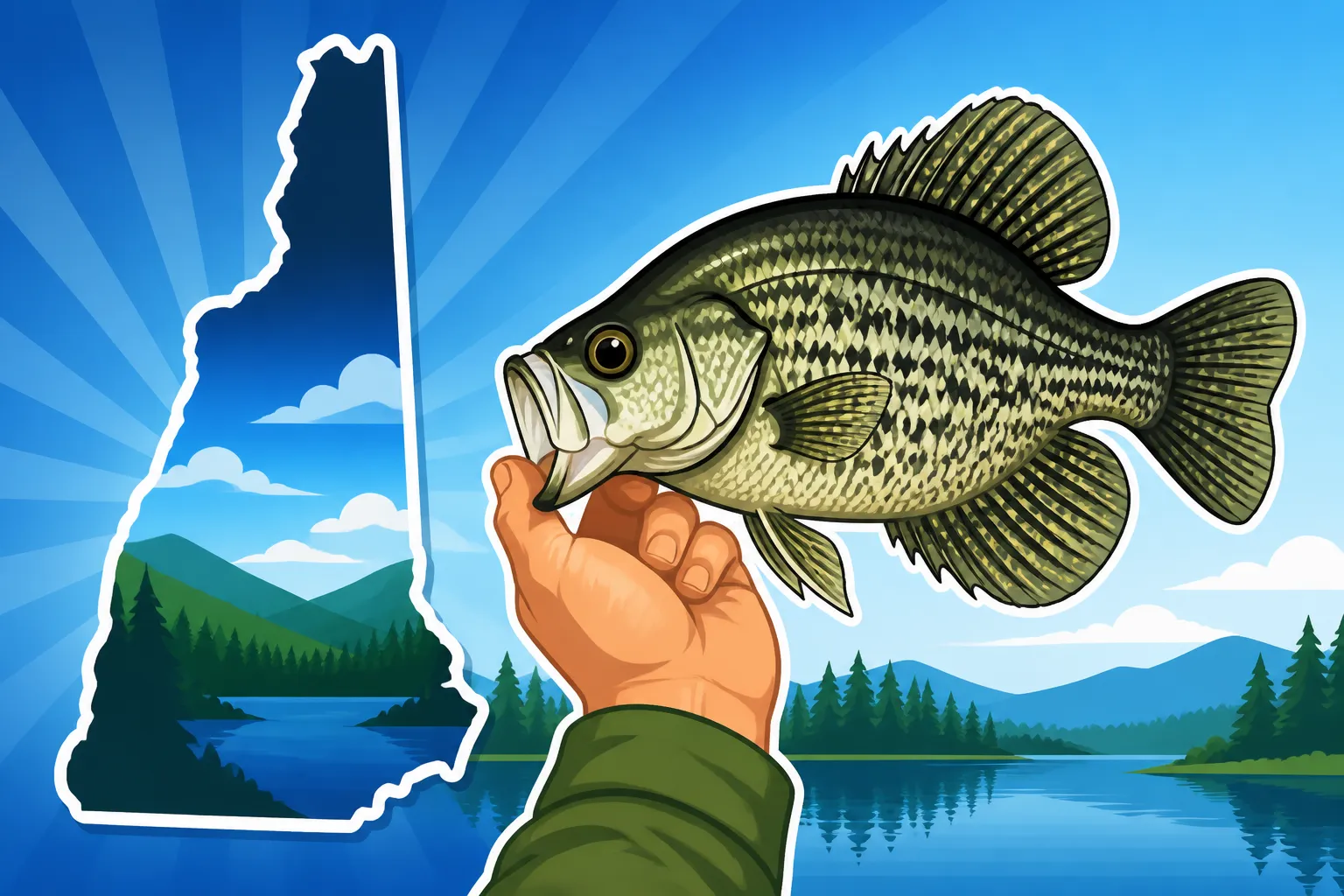
New Hampshire black crappie limit
It's incredibly frustrating when you're out on the water, having a fantastic day catching fish, but a nagging thought creeps in: "Am I even allowed to keep this many?" Especially with panfish like black crappie, which can be prolific, understanding the exact rules can feel like deciphering a secret code. This comprehensive guide is here to clear up all that confusion, giving you the definitive scoop on the New Hampshire black crappie limit so you can fish with confidence and stay well within the law.
Understanding Black Crappie Regulations in New Hampshire
Navigating fishing regulations can sometimes feel like a full-time job, but when it comes to beloved panfish like black crappie, the rules are generally straightforward in New Hampshire. These limits are put in place by the New Hampshire Fish and Game Department not to hinder your fun, but to ensure that our beautiful waters remain healthy and productive for generations to come. It’s all about striking a balance between angler enjoyment and conservation.
The Statewide Black Crappie Limit
For black crappie, New Hampshire employs a straightforward daily bag limit. Anglers are allowed to keep a generous number of these tasty panfish, which ensures there are plenty to go around while also preventing overharvesting of specific water bodies. The statewide daily limit for black crappie in New Hampshire is 25 fish per person. This means that in any given 24-hour period, once you've legally caught your 25 crappies, you need to stop harvesting that species for the day.
The possession limit often mirrors the daily bag limit for panfish, meaning you shouldn't have more than 25 black crappie in your possession, whether on the water or transported home, that were caught within a single day. This helps prevent anglers from "stockpiling" fish over multiple days, which could put undue pressure on local populations. These limits are crucial for maintaining a sustainable fishery. Crappies reproduce relatively quickly, but concentrated fishing pressure can still deplete local populations, impacting the food chain and the overall health of the aquatic ecosystem. It's a system designed to keep things fair for everyone and keep our fisheries thriving. For a broader overview, you might want to check out our guide on New Hampshire Fishing Regulations Explained.
Minimum Length Requirements for Black Crappie
One of the common questions I hear from fellow anglers is about minimum length limits. Do those little panfish need to be a certain size to be legal? The good news, or perhaps the confusing news depending on how you look at it, is that New Hampshire currently has no statewide minimum length requirement for black crappie. This means that if you catch a crappie, regardless of its size, it counts towards your 25-fish daily limit.
While this might seem counterintuitive to some who are used to strict length limits for game fish like bass or trout, it's fairly common for panfish. Crappies grow to a moderate size, and their populations are generally robust enough to handle harvest without a minimum length. The primary conservation tool here is the daily bag limit. However, it’s always smart to remember that larger crappie are often the most prolific spawners, so practicing selective harvest and releasing some of the bigger fish can contribute positively to the fishery, even without a regulation mandating it. If you're ever in doubt about specific rules, it's always wise to consult the official Reading the New Hampshire Freshwater Fishing Digest, which has all the most up-to-date information straight from the source.
Identifying Black Crappie and Similar Species
Before you can confidently keep your limit of black crappie, you absolutely need to be sure what you've actually caught! It’s all too easy to mistake one panfish for another, especially when you're excited, or the light isn't perfect. Misidentification can lead to inadvertently breaking a different species’ limit or length regulation, which is something no responsible angler wants to do.
Key Characteristics of Black Crappie
Black crappie are genuinely beautiful fish with distinct features that help set them apart. They typically have a deep, laterally compressed body, giving them a somewhat disc-like or "pancake" shape. Their coloration is usually silvery-gray with an abundance of irregular, dark blotches and spots scattered over their sides, which can sometimes appear as vertical bars. One of the most reliable identification features is their dorsal fin. Black crappie have 7 or 8 dorsal fin spines, a count that is consistent and rarely varies. Their mouths are relatively large, extending back to beneath the eye, and their eyes are quite prominent.
They are generally smaller than their cousin, the white crappie, though white crappie are less common in New Hampshire waters. A typical black crappie in New Hampshire might range from 8 to 12 inches, though specimens reaching 14-16 inches are certainly caught and are considered excellent trophies. Knowing these characteristics will help you distinguish them from other fish in your livewell. If you're keen to learn more about this species, you can dive into our detailed guide on Black Crappie in New Hampshire Waters.
Avoiding Confusion with Other Panfish
It's very common for anglers, especially those new to New Hampshire's waters, to confuse black crappie with other panfish species. Here's how to tell them apart from the usual suspects:
- Yellow Perch: Yellow perch are much more vibrant, typically sporting distinct vertical olive-green bands on their yellowish sides. They also have two distinct dorsal fins, one spiny and one soft-rayed, whereas crappie have a single, continuous dorsal fin. Perch also have a smaller mouth compared to a crappie.
- Bluegill: Bluegill, and other sunfish, have a much rounder, thicker body shape. Their coloring can vary but often includes shades of olive, blue, and orange, with a distinctive black "ear flap" on their gill cover. Their dorsal fins also tend to be less prominent, and they have fewer dorsal fin spines (typically 10-12, but shorter and less rigid).
- Rock Bass: Rock bass are often confused due to their similar spotted appearance. However, rock bass are chunkier, less compressed, and usually have reddish eyes. They also have 10-12 dorsal fin spines, which is more than a crappie.
Making an accurate identification is critical. If you're not sure, it's always best to err on the side of caution and release the fish. Consider carrying a small, waterproof field guide or even a laminated identification chart from the NH Fish and Game website. Many anglers also use fishing apps on their smartphones that can help with identification, often available for download from places like Amazon or your device's app store. Proper identification ensures you're compliant with all specific limits and rules, not just for crappie but for all species you might encounter. For a full rundown on these species, check out Panfish Fishing in New Hampshire.
Crappie Hotspots and Conservation Efforts
Black crappie are truly a fantastic species to target in New Hampshire. They're fun to catch, put up a decent fight on light tackle, and are absolutely delicious on the dinner plate. But knowing where to find them and how to fish responsibly ensures that these opportunities remain plentiful.
Where to Find Black Crappie in New Hampshire
New Hampshire offers some excellent black crappie fishing opportunities, particularly in its warmer, more nutrient-rich lakes and ponds. Crappie are structure-oriented fish, so if you're looking for them, focus your efforts around areas with submerged timber, brush piles, docks, bridge pilings, and weed beds. They love to ambush baitfish from cover.
Some of the most popular and productive crappie waters in New Hampshire include:
- Pawtuckaway Lake (Nottingham): Known for its diverse fishery, Pawtuckaway offers great crappie action, especially around its many islands and coves with fallen trees. You can learn more about fishing this fantastic spot in our Pawtuckaway Lake Fishing guide.
- Lake Winnisquam (Belmont/Laconia): While famous for its salmon and trout, Winnisquam also has a strong crappie population, particularly in its shallower bays and around old dock structures. Our Winnisquam Lake Fishing Guide provides more detail.
- Lake Massabesic (Manchester/Auburn): This large lake has extensive areas of structure and weed lines that hold good numbers of crappie.
- Smaller Ponds: Don't overlook the countless smaller ponds and impoundments throughout central and southern New Hampshire. Many of these lesser-known spots can hold impressive numbers of crappie.
Using a good fish finder can be invaluable for locating these crappie haunts. There are many excellent portable and boat-mounted models available through retailers like Amazon that can help you pinpoint those crucial submerged structures where crappie like to congregate. Remember, crappie often school, so if you find one, you've likely found a whole bunch!
Best Practices for Sustainable Crappie Fishing
While the 25-fish daily limit is generous, practicing responsible angling is vital for the long-term health of crappie populations. Here are some best practices:
- Selective Harvest: Consider keeping the medium-sized crappie (8-10 inches) for eating, as these are often the most abundant and tastiest. Release the very small ones to grow, and consider releasing the very large "slab" crappies (12+ inches) as they are often prime spawners that contribute significantly to future generations. This helps maintain a balanced age structure in the population.
- Handle Fish Gently: If you're planning to release fish, handle them as little as possible. Use wet hands, avoid touching their gills, and release them quickly back into the water.
- Use Appropriate Tackle: Light tackle is fun for crappie, but ensure your hooks are appropriately sized to minimize harm if you plan on releasing fish. Barbless hooks can also make for easier, less damaging releases.
- Respect the Ecosystem: Always pack out what you pack in. Leave no trace, and report any illegal activity to the New Hampshire Fish and Game Department.
The New Hampshire Fish and Game Department regularly monitors crappie and other panfish populations through surveys and studies. These efforts help them understand population health, growth rates, and reproductive success, which in turn informs their regulation decisions to ensure sustainable fishing for all.
Common Questions and Compliance
Even with clear limits, anglers often have practical questions about how to manage their catch and what to do in various situations. Being prepared and informed is key to an enjoyable and compliant fishing trip.
Carrying and Storing Your Catch
Once you've decided to keep some of those delicious black crappie, how you handle them matters for both quality and compliance.
- Keep Them Fresh: Crappie are excellent table fare, but like any fish, their quality deteriorates quickly if not properly cared for. A cooler filled with ice is your best friend. Get the fish on ice as soon as possible after catching them. If you're shore fishing or using a kayak, a stringer can work for a short period, but a small cooler is ideal. You can find durable fishing coolers of various sizes on Amazon to suit your needs, whether you're targeting a full limit or just a few for dinner.
- Count Your Catch: Always keep a running tally of your crappie. It’s easy to lose track, especially when the bite is hot. Have a method, whether it’s a clicker counter or simply arranging them in a way that makes counting easy, to ensure you don't accidentally exceed the 25-fish daily limit.
- Filleting on the Water: For panfish like crappie, it's generally acceptable to fillet them on the water, but always double-check the current regulations. Some species (usually larger game fish like bass or trout) require you to retain enough of the carcass to allow for species and length identification until you've reached your final destination. For crappie, this is typically not the case, but it's a good habit to verify.
| Species | Daily Bag Limit | Minimum Length | Notes |
|---|---|---|---|
| Black Crappie | 25 | None | No minimum length requirement. |
| Yellow Perch | No Limit | None | No daily bag or minimum length limit for yellow perch. |
| Bluegill | No Limit | None | No daily bag or minimum length limit for bluegill. |
| Chain Pickerel | 10 | 12 inches | Specific limits apply, demonstrating species-specific rules. |
| Bass (Small/Lg) | 5 | 12 inches | Varies by season, check current regulations. |
Note: This table is a simplified overview. Always consult the official New Hampshire Freshwater Fishing Digest for the most accurate and up-to-date regulations.
Consequences of Exceeding Limits
Nobody wants to find themselves on the wrong side of the law, especially when it comes to fishing. Exceeding the daily bag limit for black crappie, or any species, can lead to serious consequences. New Hampshire Fish and Game Conservation Officers are regularly patrolling lakes and rivers, ensuring compliance with fishing regulations.
Penalties for fishing violations can range from monetary fines to forfeiture of fishing equipment, and even loss of fishing privileges. A typical fine for exceeding a bag limit might start in the range of several hundred dollars, but it can increase depending on the number of fish over the limit and whether it's a repeat offense. It's simply not worth the risk. Our detailed guide on Fishing Without a License in New Hampshire: Penalties provides a broader look at the consequences of not adhering to fishing laws, which often includes bag limit violations.
Always remember that fishing regulations, including bag and length limits, can change annually. Before heading out each season, or even if you haven't fished a particular water body in a while, take a few minutes to review the latest rules. You can find these on the New Hampshire Fish and Game website or by picking up a physical copy of the Freshwater Fishing Digest from a license agent. Knowing the rules is part of being a responsible and ethical angler, ensuring that the joy of fishing continues for everyone.
Disclaimer
The information provided in this guide is intended for general informational purposes only and may not be entirely exhaustive or completely up-to-date. Fishing regulations in New Hampshire are subject to change by the New Hampshire Fish and Game Department. It is the angler's responsibility to consult the most current official New Hampshire Freshwater Fishing Digest or the NH Fish and Game website before engaging in any fishing activity to ensure full compliance with all laws and regulations.