New Hampshire landlocked salmon daily limit
There's nothing quite as exhilarating as a landlocked salmon hitting your line in the pristine waters of New Hampshire. These magnificent fish are a true prize, but navigating the specific regulations surrounding their harvest can sometimes feel like trying to untangle a particularly stubborn knot. This comprehensive guide is here to cut through the confusion, helping you understand the exact daily and possession limits for landlocked salmon across the Granite State, ensuring your next fishing adventure is both successful and fully compliant with the rules.
Understanding New Hampshire's Landlocked Salmon Regulations
New Hampshire boasts some truly spectacular fishing opportunities, and landlocked salmon are certainly a highlight for many anglers. But with such a prized species, comes a responsibility to protect their populations. That's why the state implements specific regulations, not just on daily limits, but also on length and sometimes even specific water bodies. Ignoring these rules isn't just a minor oversight; it can lead to hefty fines and even loss of fishing privileges, which nobody wants when they're out enjoying nature.
Why Specific Limits Matter for Landlocked Salmon
Landlocked salmon are unique in New Hampshire, as they are not native to many of the waters they now inhabit. Their presence is largely due to extensive stocking programs by the New Hampshire Fish and Game Department. These programs, alongside strict regulations, are crucial for maintaining healthy, sustainable populations in lakes like Winnipesaukee, Sunapee, Newfound, and Squam. Unlike some more prolific species, landlocked salmon have a relatively slow growth rate and can be sensitive to overfishing. Their life cycle, often relying on a smelt forage base, makes them vulnerable to ecosystem changes, further underscoring the need for careful management. Without these limits, anglers could quickly deplete the very fish they love to pursue, leading to a significant decline in future fishing quality. It’s all about balancing the thrill of the catch with the long-term health of the fishery.
Key Regulatory Bodies and Resources
The primary authority for all fishing regulations in New Hampshire is the New Hampshire Fish and Game Department. They are the folks who conduct the scientific research, manage the stocking programs, and ultimately set the rules. Their most important resource for anglers is the annual "Reading the New Hampshire Freshwater Fishing Digest". This digest is your bible for all things regulatory, covering everything from species-specific limits to fishing season dates and closures. You can usually pick up a physical copy at local license agents or outdoor stores, or access a digital version directly from the NH Fish and Game website. It's truly essential reading for any serious angler in the state.
New Hampshire Landlocked Salmon Daily Limit Explained
When it comes to landlocked salmon, New Hampshire has clear, but sometimes nuanced, rules regarding how many you can keep. It’s not just about the number of fish, but often their size and where you’re fishing. Understanding these specifics is paramount for a legal and enjoyable day on the water.
General Statewide Daily and Possession Limit
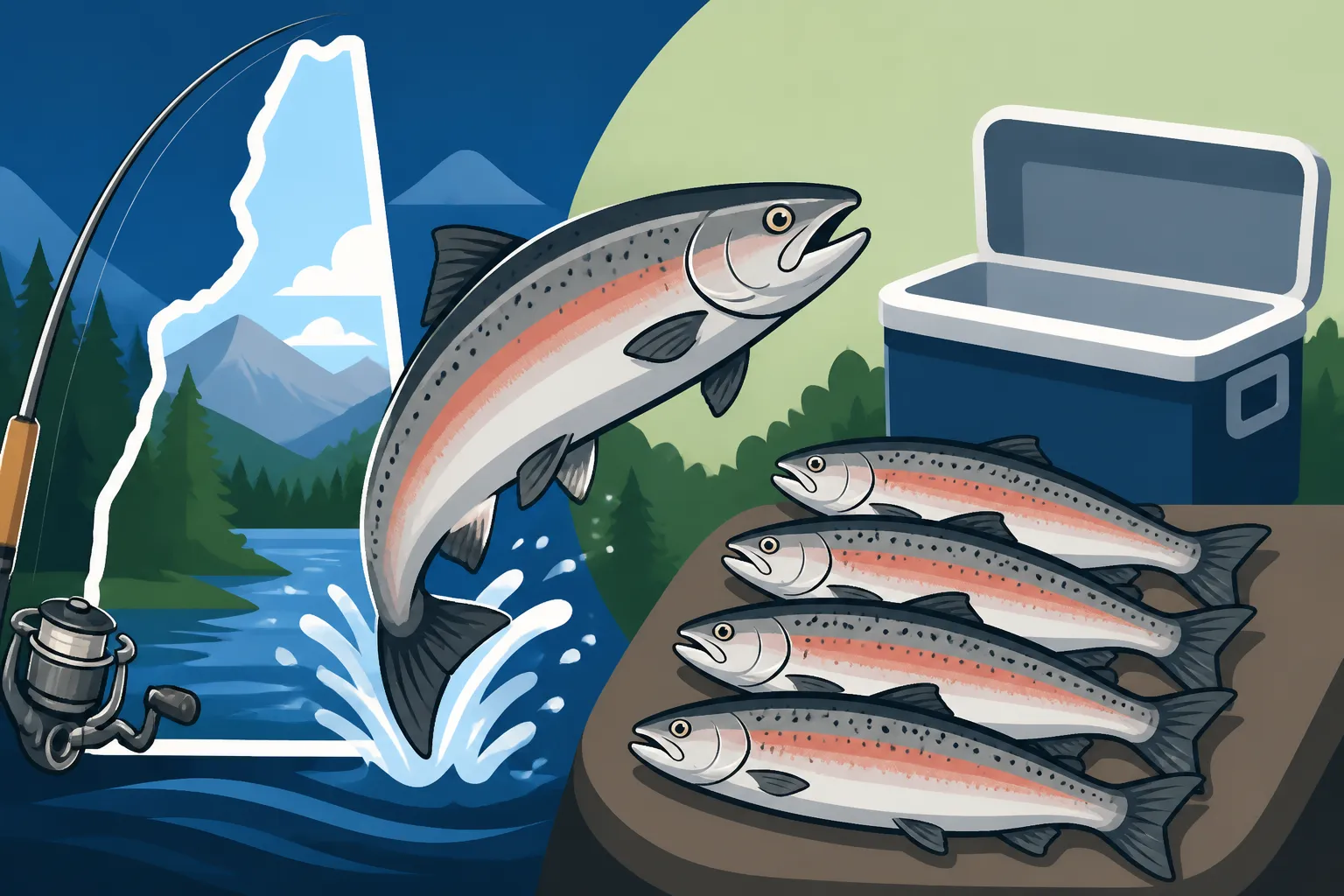
For most waters in New Hampshire, the general regulation for landlocked salmon allows you to keep 2 fish per day. This is your "daily limit," meaning the maximum number of fish you can take from midnight to midnight.
The possession limit for landlocked salmon in New Hampshire is typically 4 fish. This refers to the total number of fish you can have in your possession at any given time, whether they are on your boat, in your cooler, or back at your camp. Generally, the possession limit is twice the daily limit, to allow for multi-day trips where you might keep fish from consecutive days. However, you can never exceed the daily limit on any single day, regardless of your possession limit. So, if you've already kept two salmon today, you can't keep any more until tomorrow, even if you only have two in your cooler from yesterday.
It's also important to note that a minimum length requirement typically accompanies these limits. For most waters, landlocked salmon must be at least 15 inches in length to be legally kept. This allows the fish to reach a certain maturity and contribute to future spawning cycles before being harvested. Always carry a reliable measuring tape or bump board on your fishing trips.
Length Requirements and Slot Limits
While the 15-inch minimum is a good baseline, landlocked salmon regulations can get a bit more intricate, especially in New Hampshire's premier trophy waters. Sometimes, you'll encounter what's known as a "slot limit." A slot limit means you can only keep fish within a certain size range, or perhaps one fish above a certain size. These are designed to protect specific age classes of fish, often the larger, more productive breeders, or to thin out smaller, overabundant fish.
For example, on specific trophy salmon lakes, the minimum length might increase to 18 inches, and there could be a rule allowing only one fish over 25 inches per day. This kind of regulation ensures that the really big, mature fish have a chance to reproduce multiple times, contributing to the trophy fishery. These special length and slot limits are crucial for managing genetic diversity and ensuring continued opportunities for catching truly magnificent salmon. Always double-check the regulations for the specific body of water you plan to fish before you even cast a line. This information is readily available in the official Freshwater Fishing Digest.
Special Regulation Waters Affecting Salmon Limits
New Hampshire's most famous landlocked salmon waters often have their own unique set of rules. It’s a bit like driving on different highways where the speed limits change – you have to pay attention to the signs! Lakes such as Lake Winnipesaukee, Lake Sunapee, Newfound Lake, and Squam Lake are renowned for their salmon fishing and consequently have detailed, sometimes slightly different, regulations to protect their specific populations.
For example, while the statewide minimum is often 15 inches, these major lakes might have an 18-inch minimum length for landlocked salmon. This adjustment helps to manage the growth rates and overall health of the salmon unique to those ecosystems. It's not uncommon for these lakes to also have different bag limits or even specific periods when certain techniques are restricted. For instance, sometimes the "closed" season for trout and salmon might have different dates for these larger, deeper lakes compared to smaller ponds.
Understanding these localized rules is critical. A landlocked salmon caught legally in one lake might be considered illegal in another if you haven't checked the specific regulations for that body of water. The "New Hampshire Landlocked Salmon Regulations" section of the digest often details these exceptions.
Here's a quick summary of general landlocked salmon regulations, though always consult the current NH Fish and Game Freshwater Fishing Digest for the most accurate and up-to-date information for your specific fishing location.
| Category | General Statewide Regulation | Premier Salmon Lakes (e.g., Winnipesaukee, Sunapee, Squam, Newfound) |
|---|---|---|
| Daily Limit | 2 fish | 2 fish |
| Possession Limit | 4 fish | 4 fish |
| Minimum Length | 15 inches | Often 18 inches (check specific lake rules) |
| Slot Limit | None specified generally | Potentially 1 fish over 25 inches (check specific lake rules) |
Practical Implications for Anglers
Understanding the regulations is one thing, but applying them practically on the water is another. There are a few key practices that can help you stay compliant, contribute to conservation, and make the most of your salmon fishing trips.
Staying Compliant and Avoiding Penalties
First and foremost, always carry your valid New Hampshire fishing license. You can purchase one online or from authorized agents, including some retailers like those found on Amazon that sell outdoor gear. The state’s official website, or a local agent listed by the NH Fish and Game Department, is always the most reliable source for a license. Fishing without a license or exceeding limits can result in significant penalties, including fines that can easily run into hundreds of dollars, confiscation of your catch and gear, and even the suspension of your fishing privileges. It's just not worth the risk.
Before heading out, review the specific regulations for the body of water you'll be fishing, particularly for landlocked salmon. As we discussed, rules can vary by lake. Keep a physical copy of the Freshwater Fishing Digest or have the digital version accessible on your phone, even if it's just a screenshot of the relevant pages. When you catch a salmon, immediately measure it from the tip of the nose to the tip of the tail. If it doesn't meet the minimum length, release it gently and quickly. If you plan to keep fish, count them carefully throughout the day to ensure you don't accidentally go over your daily limit.
Catch and Release Best Practices for Salmon
Many anglers, even those who keep a few fish, practice catch and release for a significant portion of their salmon catches. Landlocked salmon are magnificent fighters, and their beauty is often admired before being returned to the water. To ensure a high survival rate for released fish, particularly if you're dealing with a larger fish that may be protected by a slot limit, follow these best practices:
- Use appropriate tackle: Heavier line and a properly set drag can help you land the fish more quickly, reducing stress.
- Minimize handling: Keep the fish in the water as much as possible. If you must lift it for a photo, support its belly and use wet hands. Avoid squeezing or handling the gills.
- Use a good landing net: A rubberized, knotless net minimizes slime coat damage and fin abrasions. Many excellent models can be found on Amazon.
- Remove hooks quickly: Use needle-nose pliers or a hook remover. If a fish is deeply hooked, especially in the gills or throat, cut the line as close to the hook as possible rather than trying to remove it.
- Revive the fish: If the fish seems sluggish, hold it gently upright in the water, facing into the current (or move it back and forth gently if there's no current) until it regains its strength and can swim away on its own.
Practicing careful catch and release not only helps individual fish survive but also contributes to the overall health and vitality of the landlocked salmon fishery, ensuring there are plenty of fish for future generations. For more detailed information, consider reading up on "Landlocked Salmon Catch and Release Survival Tips".
Planning Your Fishing Trip Around Salmon Limits
The daily limit of two landlocked salmon might influence how you plan your fishing trip. If your primary goal is to stock your freezer, you'll need to pace yourself or consider multi-day trips where the possession limit (four fish) comes into play. However, if your focus is more on the experience of catching these powerful fish, the limit simply means you'll be practicing more catch-and-release, which is a fantastic way to fish.
Your gear choices might also be affected. If you anticipate catching many salmon and releasing most, investing in high-quality single, barbless hooks for your lures can significantly reduce harm to the fish. When targeting species like salmon, which require specific techniques such as deep trolling, make sure you have the right setup. Things like specialized trolling rods, downriggers, and electronic fish finders can be invaluable. Even finding the "Best Trolling Gear for New Hampshire Lake Trout" can offer insights into salmon gear, as they often inhabit similar deep, cold-water environments.
Knowing the limits in advance helps you set realistic expectations for your day on the water and encourages a more conservation-minded approach to fishing, ensuring that these incredible fish continue to thrive in New Hampshire.
Finding Up-to-Date Landlocked Salmon Regulations
The world of fishing regulations isn't static. Changes can happen from year to year, or even within a season, based on population surveys, environmental factors, or management goals. That's why always knowing where to find the absolute latest information is vital. Relying on outdated information is a surefire way to run into problems.
Where to Access the Official Freshwater Fishing Digest
The official New Hampshire Freshwater Fishing Digest is the definitive source for all regulations, and that includes the specific rules for landlocked salmon. You can access it in several convenient ways:
- Online PDF: The most common and up-to-date method is to download the PDF directly from the New Hampshire Fish and Game Department's website. Just search for "NH Fish and Game Freshwater Fishing Digest" and you'll find the current year's version. This is incredibly handy for having on your phone or tablet when you're out on the water.
- Print Copies: Many authorized license agents throughout the state, including bait shops, general stores, and some larger sporting goods retailers, will have free print copies available. Picking one up is a great habit at the start of each fishing season.
- Mail Order: While less common now, you might even be able to request a copy be mailed to you directly from the NH Fish and Game Department.
It's a good practice to check the digest at least once a year, even if you think you know the rules by heart, as subtle changes to "New Hampshire Bag and Possession Limits by Species" or season dates can occur.
Using the New Hampshire Fish and Game Website
Beyond the full digest, the New Hampshire Fish and Game Department's website (wildlife.state.nh.us) is a treasure trove of information. You can often find specific sections dedicated to different fish species, providing detailed insights into their habitats, preferred techniques, and, of course, their regulations. For example, a quick navigation to the "Fish Species" section will lead you to detailed pages on "Landlocked Salmon Fishing in New Hampshire," which will often include direct links to the relevant regulatory sections.
The website also often features a "Where and How to Buy a New Hampshire Fishing License" section, which can be useful if you need to renew or purchase a new one. They also provide information on specific water bodies, which is invaluable when researching those "special regulation waters" we discussed earlier. Before any major fishing trip, it's worth spending a few minutes browsing the site to ensure you have the latest information at your fingertips.
Local Knowledge and Fishing Guides
While the official digest and website are indispensable, there’s also immense value in local knowledge. Bait shop owners, seasoned local anglers, and professional fishing guides are often up-to-the-minute on current conditions and any subtle changes in regulations or enforcement. A quick chat at a local bait shop can sometimes provide insights that aren't immediately obvious from a printed page, such as recent stocking efforts or specific patterns that might affect how you approach "How to Catch Landlocked Salmon in New Hampshire."
Hiring a licensed fishing guide, especially for a complex species like landlocked salmon, can be an excellent investment. Not only will they put you on fish, but they are also experts on all local regulations and can offer real-time advice. They can ensure you're fishing legally and responsibly, helping you focus on the joy of the catch. Sometimes, even online forums or local fishing clubs can offer valuable, community-driven insights, but always cross-reference any information with the official NH Fish and Game sources to be absolutely sure.
Disclaimer
The information provided in this guide is intended for general informational purposes only and is based on typical regulations in New Hampshire. Fishing regulations are subject to change, and specific rules may vary significantly by water body, season, and other factors. It is the responsibility of each angler to consult the most current New Hampshire Freshwater Fishing Digest and any relevant special notices from the New Hampshire Fish and Game Department before engaging in any fishing activity. Failure to comply with current regulations may result in penalties.